Is Japanese Hard to Learn for Chinese Speakers? A Guide
Is Japanese hard to learn for Chinese speakers? Familiar characters help, but grammar, readings, and sound timing need fresh habits. Start with clear examples.
 The Claryzo Team · · 3 min read
Japanese is challenging for Chinese speakers, but knowing Chinese characters gives literate learners a useful head start in reading and vocabulary. That advantage is smaller in conversation: Japanese grammar, word readings, and sound timing still need deliberate practice.
You may recognize a word on a menu and have no idea how to order it aloud. Familiar characters can reveal meaning without supplying the Japanese pronunciation—or the sentence you need around them.
Why is Japanese hard to learn for Chinese speakers?
The answer depends partly on what “Chinese speaker” means. Someone who reads Chinese comfortably brings a different toolkit from someone who speaks a Chinese language but rarely reads it. Mandarin, Cantonese, and other Chinese languages also provide different sound backgrounds; there is no single Chinese accent to adjust from.
Your goal matters, too. Recognizing signs, chatting with friends, and writing professional emails demand different skills. Character knowledge helps most directly with reading. Listening requires recognizing Japanese words at conversational speed, without characters sitting helpfully underneath.
Japanese uses Chinese-derived characters called kanji alongside two phonetic scripts, hiragana and katakana. Familiarity with Chinese characters helps, but Japanese character forms, meanings, and usage do not always match the Chinese forms you know.
How much do familiar characters actually help?
Shared vocabulary can make written Japanese feel unusually approachable. 電話 (denwa, “telephone”; say “den-wah,” with a light final vowel) may look familiar before you have learned its Japanese sound.
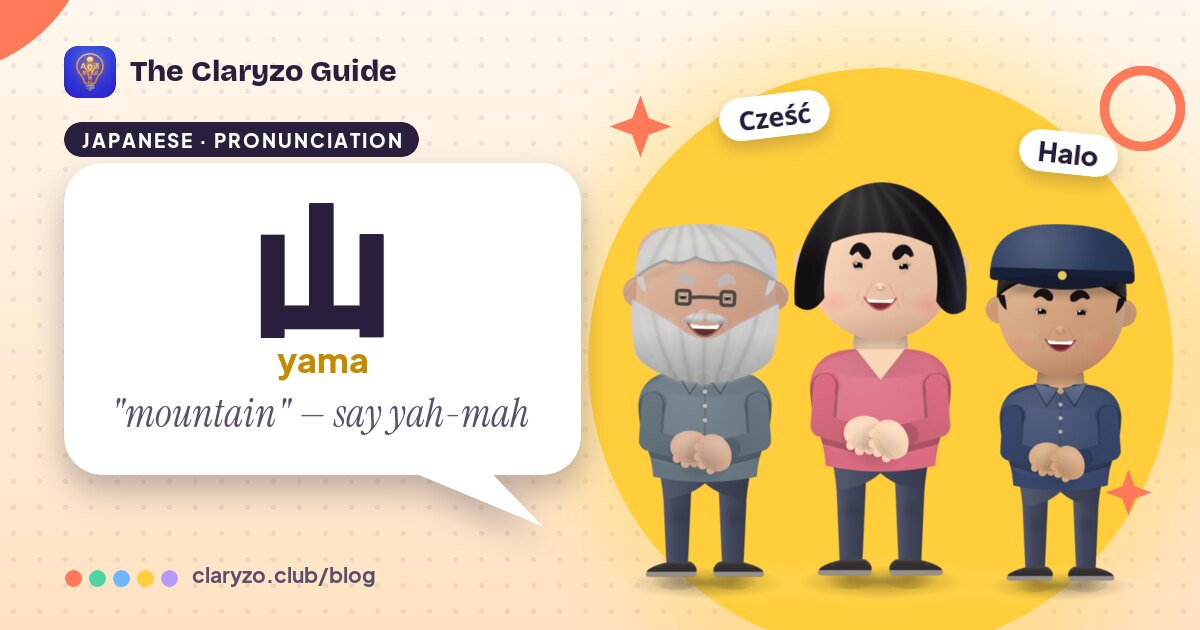
The catch is that recognizing a character does not tell you every way Japanese reads it. Compare 山 (yama, “mountain”; “yah-mah”) with 富士山 (Fujisan, “Mount Fuji”; “foo-jee-sahn,” keeping the syllables light). The same final character has a different reading.
Learn whole words with their readings, rather than assigning each character one permanent pronunciation. A familiar shape is a useful clue, not a complete dictionary entry.
Meanings can diverge, too. 手紙 (tegami, “letter,” meaning written correspondence; “teh-gah-mee”) is a classic trap for learners expecting the characters to carry their usual modern Chinese meaning. Treat apparent familiarity as something to check.
Why does Japanese grammar feel unfamiliar?
Japanese commonly places the verb at the end and uses particles after words to show their role. For a Mandarin speaker accustomed to ordinary subject–verb–object sentences, that requires a new sentence-building habit.
For example: 私はお茶を飲みます (Watashi wa ocha o nomimasu, “I drink tea”; roughly “wah-tah-shee wah oh-chah oh noh-mee-mahss”). The structure is “I—topic marker—tea—object marker—drink.” In this sentence, the topic particle written は is pronounced wa (“wah”).
Japanese also changes verb forms to express distinctions such as tense and politeness. Subjects are often omitted when context makes them clear, so everyday speech will not always resemble a tidy textbook sentence.
Practice a complete sentence in a visible situation. In Claryzo, the animated cast acts out words and phrases, giving you a scene to connect with the Japanese expression before checking a translation. That connection helps familiar characters acquire a Japanese context.
Is Japanese hard to speak?
Japanese pronunciation is approachable at the level of individual sounds, but clear speech depends on distinctions learners can easily overlook. Chinese-language experience may sharpen your attention to pitch; Japanese pitch accent still needs its own listening practice. Japanese does not simply apply Mandarin-style tones to each syllable, and accent patterns vary regionally.
Start with sound length. Compare おばさん (obasan, “aunt”; “oh-bah-sahn”) and おばあさん (obāsan, “grandmother”; “oh-baaah-sahn”). Keep your mouth open for an extra beat on the long vowel. Avoid making that beat merely louder.
Consonant timing matters as well. 来て (kite, “come,” a casual request; “kee-teh”) differs from 切って (kitte, “cut,” a casual request; “keet-teh”). For the doubled consonant, hold your tongue against the ridge behind your upper teeth briefly before releasing the t.
English-style pronunciation hints are only approximations. Use recordings to learn the actual vowels and rhythm, then practice listening to connected speech.
What should Chinese speakers practice first?
Use your reading advantage while building skills that characters cannot provide. A repeatable daily plan can follow this sequence:
- Learn hiragana and katakana, connecting each symbol with audio.
- Choose a few useful words. Record their Japanese readings and meanings together, even when the characters look obvious.
- Listen to one short sentence without reading. Check the text afterward.
- Repeat the sentence, paying attention to long vowels and held consonants.
- Change one word, then say the new sentence from memory in an appropriate situation.
Progress will vary with your literacy, previous exposure, practice, and goals. Familiar characters give you useful footholds. Your ears and mouth still have to meet the words.