Is Mandarin Hard to Learn for Hindi Speakers? Tones Made Clear
Is Mandarin hard to learn for Hindi speakers? Learn where Hindi helps, why tones feel unfamiliar, and how to practice with seven useful Chinese examples.
 The Claryzo Team · · 5 min read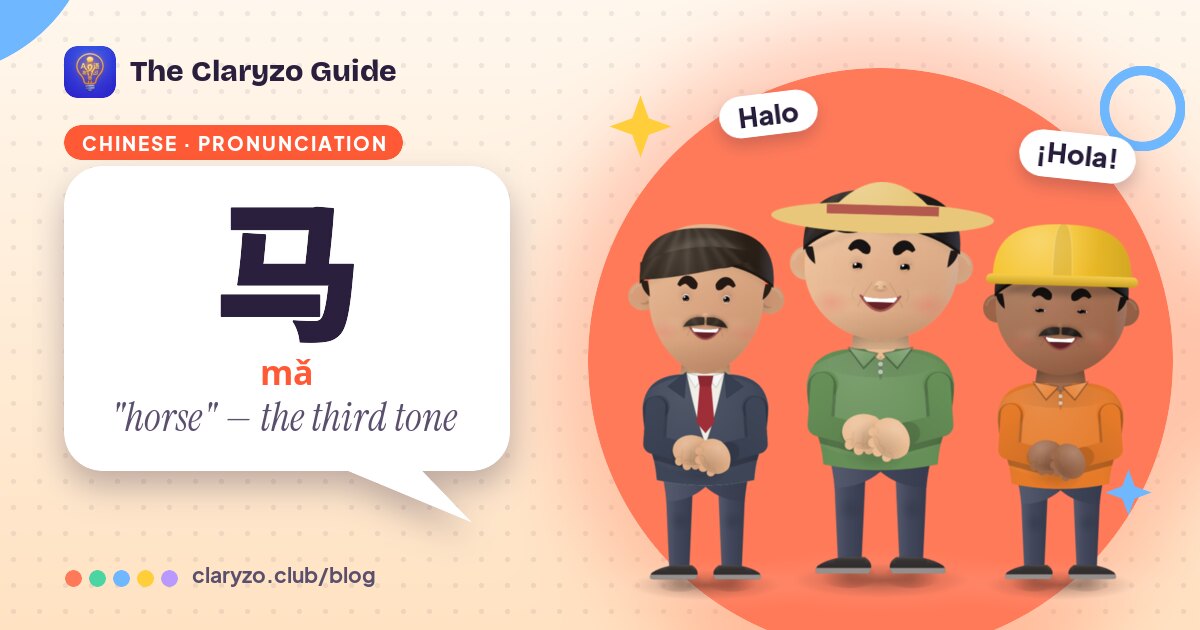
You copy a Mandarin word carefully, but your listener hears a different word. Every consonant seemed right. Mandarin is challenging for Hindi speakers mainly because pitch helps identify words, and the writing system takes sustained study. Hindi gives you useful experience with contrasting breathy bursts and tongue positions, but Mandarin tones need their own training.
So, is Mandarin hard to learn for Hindi speakers? Yes, in specific ways—but Mandarin also removes some familiar work: verbs do not change for person, and nouns do not have grammatical gender. For your first spoken exchanges, learning to hear and produce tones is a more useful priority than deciding whether the whole language deserves a “hard” label.
Why is Mandarin hard to learn for Hindi speakers?
Hindi uses pitch to express questions, emphasis, and attitude. Standard Mandarin uses pitch for those purposes and to distinguish words. A Hindi speaker already changes pitch while talking; the new task is attaching a particular pitch pattern to a particular syllable.
English speakers face a similar adjustment. If you also speak English, resist treating Mandarin tone as English-style stress. Making a syllable louder or longer does not automatically give it the right tone.
Hindi offers some starting points. Hindi distinguishes consonants with and without a strong puff of air, and Mandarin makes an important aspiration distinction too. Mandarin pinyin letters b and p, for example, contrast primarily through that puff, rather than through the English distinction those letters suggest.
That familiarity helps, but the sound systems do not match perfectly. Hindi’s retroflex consonants may also make tongue-position instructions less mysterious, without making Mandarin’s curled-back sounds identical to Hindi’s.
Grammar brings different adjustments. Hindi commonly places the verb after the object; a basic Mandarin statement generally puts the verb before the object. Familiarity helps in patches. No language hands over its entire instruction manual.
What are Mandarin tones actually doing?
A tone is a pitch pattern carried by a syllable. Keep your jaw and tongue comfortable: pitch changes come from your voice, not from pushing your chin up and down.
Standard Mandarin has four main tones, plus a neutral tone used on certain unstressed syllables. Start with the four main patterns on one syllable:
| Example | Meaning | Plain-English pronunciation hint |
|---|---|---|
| 妈 (mā) | “mom” | Say “mah” with lips closing for m, then hold a comfortably high, level pitch. |
| 麻 (má) | “hemp” | Use the same “mah,” with pitch rising from the middle of your range. |
| 马 (mǎ) | “horse” | Use “mah” with a low pitch; in a careful isolated model, let the pitch dip and then rise. |
| 骂 (mà) | “to scold” | Use “mah” with a clear fall from high to low, keeping your throat relaxed. |
The letters stay the same. The pitch pattern changes the word. English hints such as “mah” only approximate the vowel; a recording supplies the actual sound.
The marks above pinyin vowels show tone. Learn the tone as part of the word, alongside its consonants and vowels. Memorizing a toneless spelling leaves out information your listener needs.
The third tone deserves special attention. Its full dipping-and-rising shape is useful for an isolated demonstration, but in connected speech it often stays low without a full rise. Trying to perform a grand swoop on every third-tone syllable makes ordinary speech unnecessarily difficult.
Is Mandarin hard to speak?
Mandarin becomes harder to speak when you practice individual tones perfectly and then abandon them inside phrases. Your mouth needs practice moving between pitch patterns.
These three examples turn the tone lesson into something usable:
- 买 (mǎi) means “to buy.” Say roughly “my,” starting with closed lips for m, and use a low third tone.
- 茶 (chá) means “tea.” Say roughly “chah,” with the tongue tip slightly curled back, a noticeable puff of air, and a rising tone.
- 你好 (nǐ hǎo) means “hello.” Say roughly “nee how.” Before another third tone, the first third tone changes to a rising second tone, so the spoken pattern is approximately ní hǎo.
That greeting illustrates tone sandhi: predictable tone changes caused by neighboring tones. The dictionary tones remain useful, but connected speech has rules of its own. Learn common phrases with their actual spoken pattern.
In Claryzo, the animated cast acts out words and phrases, helping you connect the sound with a visible meaning before reading a translation. That gives a tone pattern something concrete to attach to.
For more detail on the pitch patterns, the guide to hearing and saying all four Mandarin tones extends this practice.
Which mistakes should Hindi speakers watch for?
Replacing tone with emphasis. A forceful syllable can still carry the wrong pitch. Practice at a comfortable volume, keeping loudness fairly steady while pitch changes.
Reading pinyin as English spelling. Pinyin is a system for representing Mandarin sounds. Its letters need their own sound associations, especially when a familiar-looking letter suggests the wrong tongue position.
Stretching every syllable equally. Mandarin speech includes differences in prominence and duration, including light neutral-tone syllables. Copy the rhythm of short recordings rather than giving every syllable a ceremonial entrance.
Practicing only by speaking. If two tones sound identical to you, producing them reliably will be difficult. Alternate listening and speaking: identify a tone first, then copy it, then check against the recording.
A recording of your own voice helps reveal differences, but your judgment will improve as your listening improves. One replay is evidence, not a final verdict on your accent.
Is Mandarin hard to write?
Learning Chinese characters is a substantial task for a Hindi speaker. Devanagari gives you systematic ways to represent consonants and vowels; Chinese characters do not spell pronunciation in the same way.
Many characters contain components associated with meaning or pronunciation, but those clues are not a complete pronunciation guide. Learn a character together with its spoken word, tone, and meaning.
Speaking and reading can develop alongside each other without advancing at identical speeds. Pinyin supports early pronunciation practice; regular character study builds the reading knowledge pinyin alone cannot provide.
How to learn Mandarin fast: a ten-minute tone drill
“Fast” works best as a request for focused practice, rather than a promised completion date. Use the seven examples above for a small, repeatable session:
- Listen for two minutes. Use a reliable learner recording. Hear each example before looking at its pinyin.
- Identify for two minutes. For the four single-syllable tone examples, name the tone you hear, then check.
- Copy for two minutes. Repeat after the recording. Keep your throat relaxed and move pitch within a comfortable range.
- Record for two minutes. Compare one attempt with the model. Pick one difference to work on.
- Recall for two minutes. Look at a meaning and retrieve the spoken word, including its tone. Check immediately.
Move from isolated words to a first real Mandarin exchange once those patterns become more familiar. Keep some listening practice in every session.
Your Hindi-speaking ear already knows that small sound differences can carry a lot of meaning. Mandarin gives pitch that same responsibility.